











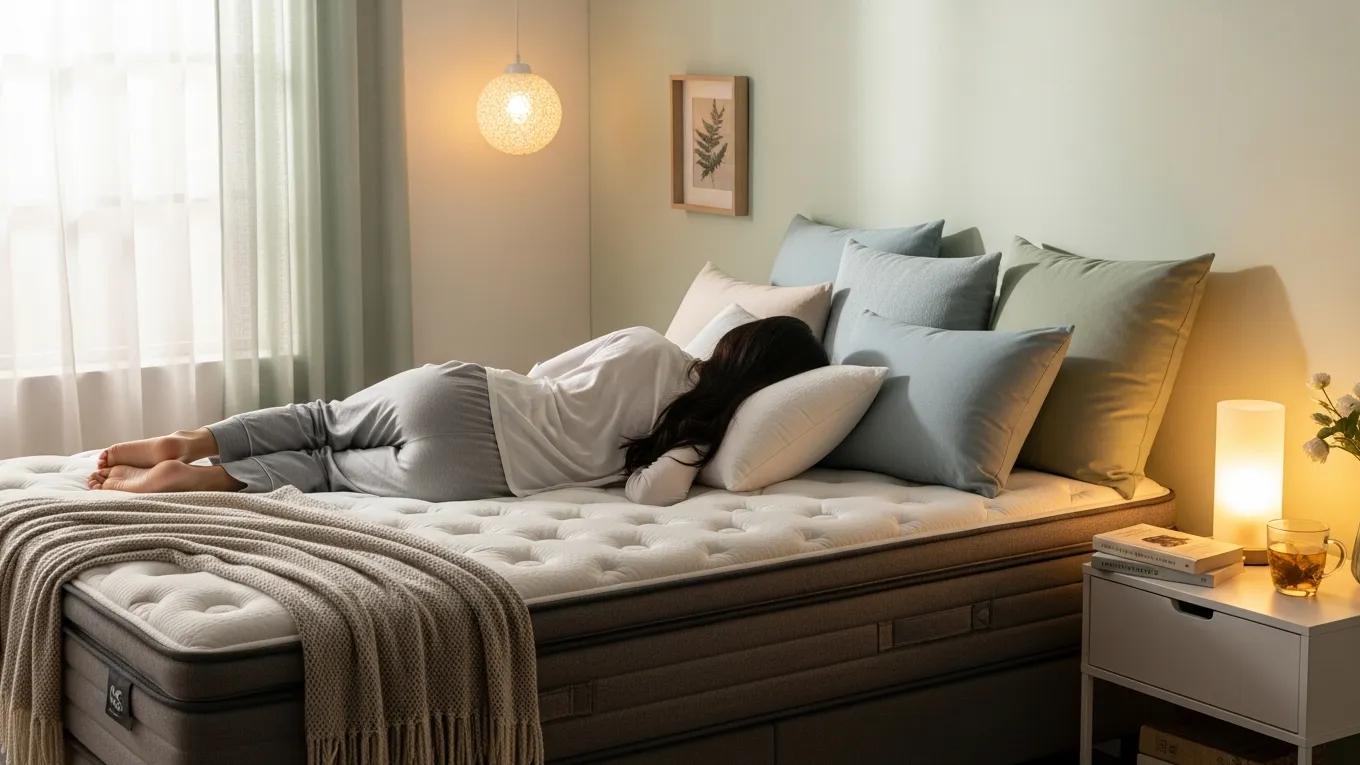
Side Sleeper Mattress Buying Guide: What to Look for Before You Buy
Choosing the right mattress matters for side sleepers because it affects sleep quality and comfort. This guide highlights the core factors—construction, firmness, and materials—plus how body weight and personal preference influence the best choice.
Before purchasing a mattress for side sleepers, consider the following factors:
Focus on pressure relief, spinal alignment, and durability. Match materials and firmness to your body weight and sleeping habits, and look for zoned support if you need targeted reinforcement.
Types of Mattresses
Common options for side sleepers include:
Memory Foam: Deep contouring and pressure relief for shoulders and hips.
Hybrid: Coils plus foam for responsive support with contouring layers.
Latex: Durable, responsive surface with natural bounce and alignment.
Firmness Levels
Side sleepers typically do best with a soft to medium (medium‑soft to medium‑firm) feel: enough sink for the shoulders and hips without letting the midsection collapse.
Mattress Design for Side Sleepers: Accommodating Shoulders Higher sides to accommodate the shoulder of side sleepers; and a lower middle area to accommodate back sleepers. In the present study, memory foam mattress 2 was associated with Sleeping Position, Pillow and Mattress Type Linked to Neck Pain, Headache and Sleep Quality, J Ylinen
Materials
Materials change feel and temperature management. Key choices:
Memory Foam: Contours closely for pressure relief.
Zoned Latex: Targeted support with responsive lift.
Breathable Materials: Gel, perforation, or open‑cell foams improve airflow.
Features Enhancing Comfort and Support
Helpful features include zoned support, cooling layers, and compatibility with adjustable bases to fine‑tune positioning.
Personal Comfort Preferences
Try mattresses when possible and note how the shoulders and hips feel. Prioritise the combination of pressure relief and spinal neutral alignment that works for you.
What Mattress Firmness Is Best for Side Sleepers?

A medium‑soft to medium‑firm mattress usually balances contouring and support for side sleepers, reducing pressure while keeping the spine aligned.
Medium-Firm Mattresses for Sleep Quality and Pain Reduction Results of this systematic review indicate that mattresses subjectively identified as medium‑firm were associated with positive outcomes; the authors also note considerations related to temperature. Effect of different mattress designs on promoting sleep quality, pain reduction, and spinal alignment in adults with or without back pain; systematic review of controlled …, A Radwan, 2015
Medium-Firm Mattresses: Comfort, Sleep Quality, and Spinal Alignment Results of this systematic review show that a medium‑firm mattress promotes comfort, sleep quality and rachis alignment. What type of mattress should be chosen to avoid back pain and improve sleep quality? Review of the literature, G Caggiari, 2021
What Are the Benefits of a Soft Mattress for Side Sleepers?
Soft mattresses cushion shoulders and hips well and can reduce pressure‑related awakenings for many side sleepers.
Pressure Relief: Softer top layers ease contact points.
Spinal Alignment: Properly matched softness supports a neutral spine.
Improved Sleep Quality: Less soreness and fewer disruptions for sensitive sleepers.
For curated options suited to side sleepers, see Golden Isles Mattress.
What Are the Pros and Cons of Firm Mattresses for Side Sleepers?
Firm mattresses offer broad support and long life but can create pressure at the shoulders and hips for side sleepers. Balance firmness with cushioning layers if you prefer a firmer core.
Pros
Support: Good for overall alignment and lumbar support.
Durability: Often retain shape longer.
Cons
Pressure Points: May feel too hard at shoulders and hips.
Comfort: Many side sleepers find a very firm surface uncomfortable.
Which Mattress Materials Provide Optimal Pressure Relief for Side Sleepers?

Top choices for pressure relief:
Memory Foam: Deep contouring to offload shoulders and hips.
Latex: Responsive, supportive, and breathable.
Hybrid: Coil support with comfort layers for balanced relief.
How Does Memory Foam Support Side Sleepers' Pressure Points?
Memory foam redistributes weight to reduce peak pressure at shoulders and hips and reduces motion transfer, which helps partners sleep undisturbed.
What Are the Advantages of Hybrid Mattresses for Side Sleepers?
Hybrids pair foam contouring with coil support for pressure relief plus responsiveness—useful if you change positions or share a bed.
Pressure Relief and Support: Foam layers cushion while coils provide structure.
Versatility: Works across sleep positions.
Temperature Regulation: Coils and breathable layers help airflow.
How to Choose a Mattress That Alleviates Hip and Shoulder Pain for Side Sleepers?
Select constructions and a firmness that relieve pressure while keeping the spine neutral. Look for comfort layers that contour and a supportive core that prevents sagging.
Recommended Materials: Memory foam or latex top layers.
Firmness Levels: Medium‑soft to medium‑firm is a good starting point.
Specific Features: Zoned support and thicker comfort layers help heavier areas.
What Features Should You Look for to Reduce Pressure on Hips and Shoulders?
Seek adaptive comfort layers, zoned support, and generous comfort thickness to spread pressure and maintain alignment.
Adaptive Materials: Conform to curves for targeted relief.
Zoned Support Systems: Firmer under the midsection, softer at shoulders.
Thick Comfort Layers: Provide cushioning without excessive sinkage.
How Does Mattress Firmness Affect Pain Relief for Side Sleepers?
Firmness determines how pressure is distributed. Too firm concentrates pressure; too soft lets the midsection drop. Aim for a balance that cushions contact points and supports the spine.
What Are the Benefits of Shopping Locally for Side Sleeper Mattresses in the Golden Isles?
Shopping local provides personalised advice, immediate availability, and the chance to try models in person—helpful when matching feel to need.
Personalized Service: Tailored recommendations.
Support for Local Businesses: Keeps dollars in the community.
Immediate Product Availability: Faster delivery and setup.
Explore our selection at Golden Isles Mattress.
How Does Appointment Scheduling Enhance Your Mattress Buying Experience?
An appointment gives focused time with staff, personalised recommendations, and a faster, more efficient visit.
One-on-One Attention: Staff assess your needs directly.
Tailored Recommendations: Products matched to your sleep style.
Streamlined Shopping Experience: Reduced wait and a focused trial.
What Do Local Customers Say About Golden Isles Mattress?
Customers praise knowledgeable staff, personalised service, and durable products. For inquiries or to schedule a consultation, please reach out to us.
Frequently Asked Questions
What is the ideal thickness for a mattress for side sleepers?
Typically 10–14 inches; thicker profiles usually add cushioning, but material matters more than height—memory foam can contour well at lower profiles.
How often should side sleepers replace their mattresses?
Replace every 7–10 years depending on wear. Replace sooner if you notice sagging, lumps, or a loss of support.
Can a mattress topper improve comfort for side sleepers?
Yes. A memory foam or latex topper can add cushioning to a too‑firm mattress, but ensure it maintains spinal alignment.
What role does pillow choice play for side sleepers?
Pillows are important for neck alignment—side sleepers often prefer medium to high loft pillows (memory foam or latex) to fill the space between head and shoulder.
Are there specific brands known for side sleeper mattresses?
Brands like Tempur‑Pedic, Purple, and Saatva offer models suited to side sleepers. Local shops such as Golden Isles Mattress may carry curated options and trial periods.
How can I test a mattress before buying it?
Try a mattress in your usual position for 10–15 minutes in‑store and ask about home trial periods to confirm comfort over several nights.